Saturday, January 27, 2007

Lesson 16 - Russian Cursive (Letters "Б,В,Г")


Today I'll show you how to write Б,В,Г in cursive.

(Please follow the video for this lesson. Just click on the title of the blog entry.)

Friday, January 26, 2007

Lesson 15 - Russian Cursive (Letter "А")


Today you will learn to write Russian cursive "А". I will include more than one letter in my future lessons.
Thanks to one of my listeners I was able to upload a "Russian Cursive Workbook" in the DOWNLOADS section on the right.

The Cyrillic alphabet was adopted by the Slavs in about the 9th century. Although it is named after St. Cyril (Constantine), it was not invented by St. Cyril. It is based on the system of Greek capital letters. If you know the Greek alphabet, many of the letters will be familiar to you.
The Cyrillic alphabet, with some modifications, is used by many nations in Europe and Asia, including Russia, Ukraine, Belorussia, Serbia, Macedonia, Bulgaria, Uzbekistan, Kazakstan, and Mongolia, to name only a few.

Few Americans write in cursive script anymore. All Russians write in cursive. You won't need to learn cursive to "get by" such as reading street signs or newspapers, and Russians will be able to read your notes if you print your letters. But you'll need to learn cursive to read Russians' handwriting. If you want to learn "good Russian" then learn to write in cursive. If you just want to "get by" on vacation you can skip this.

Russian cursive letters looks quite different from Russian printed letters. Some letters look like English cursive letters, but represent different letters. The bane of Russian cursive is the letters м т л и ш щ ц, which look almost identical.

Upper- and lower-case cursive letters look quite different. Thus Russians use three distinct alphabets: printed, upper-case cursive, and lower-case cursive.


In this example, each letter--upper and lower case--is followed by the same letter in Russian cursive. You will notice that in the block style, the only difference between the upper and lower case letters is the size. In the cursive style, certain letters distinguish between upper and lower case.

(Please follow the video for this lesson. Just click on the title of the blog entry.)
-----------------------------------------------------

Wednesday, January 17, 2007

Little survey (Небольшой Опрос)


How many of you, my dear listeners, would be interested in learning how to write in Russian cursive? Please, e-mail me.

Update: survey is closed

Friday, December 22, 2006

Lesson 14 - Merry Christmas and a Happy New Year!

• ❑ Opening Word

Ну, здравствуйте, мои дорогие слушатели = Well, hello, my dear listeners!
Как вы поживаете? = 'How are you?'

'Как вы поживаете' is basically the same as 'Как дела'. The difference is in the use. I'd never say 'Как дела' to a person I just met, or to someone who's a lot older than I am. 'Как дела' is reserved for close friends, family and children. The use of 'Как поживаете' in turn is more appropriate when addressing people much older than you, groups of people, someone you don't know very well, or simply to show respect.

So, как вы поживаете? У меня всё хорошо. (I am doing fine). Are you ready for another spoonful of Russian today?

• ❑ Lesson#14 - Merry Christmas and a Happy New Year!

It would be more than appropriate to teach you a few Christmas and New Year-related phrases.

Many of you probably know that Russians have always been big on celebrating the New Year's rather than Christmas. After the 1917 Revolution, Christmas was banned throughout Russia, along with other religious celebrations. In 1992 the Christmas celebration was revived and announced to be an official state holiday. Note that the Orthodox Christmas falls after the Western Christmas on the 7th of January! Together with the Russians the Orthodox Christmas is celebrated by Romanians and Serbs, while the Greeks adopted the Western Christmas.

Did you know that the New Year holiday has been celebrated in Russia for more than 300 years? It's Peter the Great who established the New Year celebration on the 1st of January. In his documents the evergreen trees were considered the main decoration for the holiday. That will explain my choice for today's song later.

But let us turn to Russian Christmas and New Year vocabulary.

Now, during the time right before the New Year holiday people say 'С Наступающим Новым Годом' literally 'With forthcoming New Year'. But I'd translate is as 'Happy Holidays'!

Natalia: Джулия, с Наступающим Новым Годом! (S Nas-too-pah-you-schim Novym Godum)
Julia: И тебя тоже, мам.(Ee te-byah toh-zhah, mum) = ('You, too, Mom.')

When the clock strikes 12 on January 1st, it's safe to yell out: 'С Новым Годом!' You can hear people saying 'С Новым Годом' well into February. Especially to the ones they haven't seen since the previous year:)

'Merry Christmas' will be 'С Рождеством Христовым' (S Rozh-deh-stvom Khris-to-vym). I do not remember the particulars of the Russian Christmas celebration, since I left Russia in 1995. But I did some research on the subject and compiled some facts that I hope you'll find interesting. You can find the text file 'Russian Christmas' in my 'downloads' section.

Once again, if you want to wish someone a Merry Christmas, say 'С Рождеством Христовым!' And if you want to wish a Happy New Year, say 'С Новым Годом!' But all through the holiday season 'С праздником' (S prahz-knee-kom) will be always appropriate and timely.

'С праздником, дорогие товарищи! :))))))) Well, maybe not that official... 'товарищи' means 'comrades'.
'С праздником, друзья!' ---- 'Happy holidays, friends!' Now, that's more like it.


• ❑ Song

"В лесу родилась ёлочка"

("A Little Fir Tree's Born") performed by a children's choir.
This is the most popular Russian New Year's song. Every Russian knows it. It's something that no winter holiday can do without. The author of the lyrics is a school teacher, who was also a librarian: Raisa Adamovna Kudashova. The song was born in 1903 and since then it brings joy and excitement to Russian kids just like that little fir tree from the song......

"В лесу родилась елочка"

В лесу родилась елочка,

В лесу она росла,

Зимой и летом стройная,

Зеленая была.

Зимой и летом стройная,

Зеленая была.

Метель ей пела песенку: 

"Спи, елочка, бай-бай!"

Мороз снежком укутывал:

"Смотри, не замерзай!"

Мороз снежком укутывал:

"Смотри, не замерзай!"

Трусишка - зайка серенький

Под елочкой скакал.

Порою волк, сердитый волк,

Рысцою пробегал.

Порою волк, сердитый волк,

Рысцою пробегал.

Чу! Снег по лесу частому

Под полозом скрипит;

Лошадка мохноногая

Торопится, бежит.

Лошадка мохноногая

Торопится, бежит.

Везет лошадка дровеньки,

А в дровнях старичок,

Срубил он нашу елочку

Под самый корешок.

Срубил он нашу елочку

Под самый корешок.

Теперь ты здесь нарядная,

На праздник к нам пришла,

И много, много радости

Детишкам принесла.

И много, много радости

Детишкам принесла
------------------------------------------------------

(the English Translation)

In the woods a spruce was born,

It was growing in the wood

In summer and winter

it was straight and green.


The blizzard sang it a lullaby:

Sleep dear spruce, sleep tight!

The frost put snow around it
 saying:
Don't freeze!


The timid grey rabbit

hopped under the tree,

From time to time

The angry wolf just trotted by.


Hush, listen! Deep in the woods

Snow scratches under a sleigh.

A heavy horse 

Runs smoothly.


The sleigh carries firewood,

and in it was an old man

He chopped it down

at the very roots.


And here it is,
all dressed up,

it's come to us for the holiday

And lots and lots of happiness

it brought to the children.

And here is the same song performed by my 10 year-old Emily:


• ❑ Closing Word

Вот и всё. That's it.

А я прощаюсь с вами и говорю вам 'Счастливого Рождества и с Наступающим Новым Годом!'
(I am saying 'good-bye' and 'Merry Christmas and a Happy New Year!')

Увидимся в следующем году!
('See you next year!')

Help - Which Mic to Get?

I wrote a special Christmas edition of "A Spoonful of Russian" and trying to record it now. My current mic (Samson C01U) is acting up and giving me the same problems as last time. (Remember the poor sound quality?)

I decided to go out and get a new mic. Any suggestion as to which USB mic to get would be much appreciated!

Monday, December 04, 2006

Lesson 13 - Family Matters

Добрый день, друзья! Как дела? Хорошо? Отлично.
(Hello, friends! How are you? Doing well? Great!)

It's December now, and I am a bit late with my coming back to the 'Spoonful of Russian'. I was hoping to get it started again in November, but....like they say in Russia: "Люди предполагают, а Бог располагает!" Which literally means "People make plans, but everything is in God's hands'.

To quickly bring you up to date we are in our new house in Charlotte, NC and lovin' it! Still lots of things to do around the house to make our home --> thus lack of time for making podcasts:(

For all the listeners who were asking about our trip to my hometown in Russia - the trip did not materialize for a couple of reasons. The Russian embassy told me I had some problems with my Russian passport at the last minute when I had the tickets in my hands! Then the airline company refused to refund us after we told them we were not going to Russia. But enough of that. Let's get to our lesson.

-------

А теперь давайте окунемся в сегодняшний урок = Let us dive into today's lesson. We are in the middle of great family holidays now. I hope everyone had a great Thanksgiving (День Благодарения) and now you are looking forward to Christmas (Рождество)! One thing these 2 holidays have in common is family gatherings. Dads, Moms, Grandmas, Grandpas, husbands, wives, brothers, sisters, cousins, daughter, sons, grandchildren....get together for a very special time. Would you know how to label a specific branch of your Family tree in Russian? To help you out I made a chart of the family members and relations. All family members have gender-specific names. Please, listen carefully as I pronounce the words. You are welcome to pause this podcast recording, rewind and repeat.


(click on the chart for a larger view) ...


-----

For the musical part of the podcast I chose a timeless song performed by a singer from the former Soviet Republic of Georgia - Nani Bregvadze. The song is called "Снегопад" or "The Snowfall" where the snowfall stands for the end of one's youth. The singer is pleading with the Snowfall to wait and not to knock on her door. She still has love and tenderness to give, and hopes to share. The text is full of beautiful metaphors and similies. Almost 40 years have passed since Nani sang the song for the first time, but it still resonates in people's hearts, because the theme is eternal.

"СНЕГОПАД"

Я еще не успела испить свою осень
А уже снегопад сторожит у ворот
Он надежды мои как дороги заносит
И грозит застелить надо мной небосвод

Снегопад, снегопад, не мети мне на косы
Не стучи в мою дверь, у ворот не кружи
Снегопад, снегопад, если женщина просит
Бабье лето ее торопить не спеши

Не спеши, снегопад, я еще не готова
Ты еще не успел мою душу смутить
Неизлитую боль лебединого слова
Не тебе, а ему я хочу посвятить

Снегопад, снегопад, не мети мне на косы
Не стучи в мою дверь, у ворот не кружи
Снегопад, снегопад, если женщина просит
Бабье лето ее торопить не спеши

Я еще разобьюсь о твою неизбежность
Голубая метель запорошит мой дом
Я прошу, снегопад, не заснежь мою нежность
Не касайся любви ледянящим крылом

Снегопад, снегопад, не мети мне на косы
Не стучи в мою дверь, у ворот не кружи
Снегопад, снегопад, если женщина просит
Бабье лето ее торопить не спеши
Торопить не спеши, торопить не спеши


--------

That's it. Now you can call your family members using the words you've learned today. But be advised, when addressing your brother, he might have a negative reaction to the word. It's somewhat close to the English word 'brat' :)

I want to apologize for not answering all of your e-mails. After the move I have taken up some new responsibilities and am very short on spare time. But I still welcome all your input and comments.

This lesson's recording quality leaves much to be desired, but I promise next lesson will be much better.

----------

Monday, November 06, 2006

Just a little bit longer....

Summer break is over, and the wonderful Autumn days are here. We are loving it here in Charlotte. The colors of the leaves are breathtaking! But I am still unable to set up my recording studio like I'd like to. It looks like I'll be able to do so in the next 2 weeks though. So, stay tuned!

Many thanks to all those who send me e-mails, 'bugging' me about coming back.

Tuesday, June 13, 2006

Summer Break

Привет всем! Looks like it's going to be a long summer break for you and a busy summer for me:) From now till the new academic year my family will be going back and forth to Charlotte, NC to settle things concerning our new residence, my husband's new job and our kids' new schools. In addition to that we are still working on getting visas for our trip to Russia in August. (What a lengthy process!)...

I haven't seen my family and friends in Russia in 7 years, and it's quite a job to find presents for all of them now. Which size clothes to bring? :)))))) Maybe I should go with 'one-size-fits-all' baseball caps?

Please, don't despair and look forward to more Russian lessons from me after this summer is over. I can't wait to start producing again!

С любовью,
Наталия.

Friday, April 21, 2006

Lesson 12 - Happy Birthday!

Topic - Birthday Greetings

• ❑1 intro


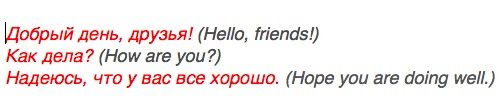
Добрый день, друзья! (Hello, friends!)
Как дела? (How are you?)
Надеюсь, что у вас все хорошо. (Hope you are doing well.)


Thank you for keeping up with this podcast even though I do not produce them as often as I'd like to. I am excited to get e-mails and comments on the spoonfulofrussian.com site. Your enthusiasm is contageous! For those who asked about the condition of our house, we just sold our restored home and are planning on moving to Charlotte, North Carolina, right after our trip to Russia in August. I can hardly wait!


• ❑2 Happy Birthday!

It's lesson 12 (двенадцатый урок). Tomorrow we'll be celebrating my youngest daughter's 6th birthday. I taught my daughters to say a few birthday greetings in Russian. Let me share them with you.

So, How do you say 'Happy Birthday' in Russian?
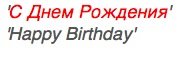
Эмили: "I know." It's "С Днем Рождения".
That's right, Emily. "С Днем Рождения" means 'Happy Birthday' . So, what are you going to say to your sister tomorrow?
Эмили: 'С Днем Рождения, Джулия". To which Julia will probably reply "Спасибо, Емили".

Then Russians usually wish health, happiness and longevity to the birthday person among other things. The phraze 'I wish you' will be 'Я желаю тебе...' (informal, to be used addressing friends, family, children) or ' Я желаю Вам'... (formal, to be used addressing older people, people you are not very close to, or just to show respect). Can you say 'Я желаю тебе...' 'Я желаю Вам...'?

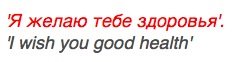
Good. Let us wish Julia health. 'Я желаю тебе здоровья'. Emily: 'Я желаю тебе здоровья'.
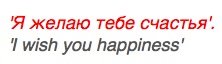
Now, let's wish her happiness. 'Я желаю тебе счастья'. Emily: 'Я желаю тебе счастья'.
Let's also wish her long life - долгих лет жизни. 'Я желаю тебе долгих лет жизни.' Emily: 'Я желаю тебе долгих лет жизни.'
Молодец, Эми. What would I do without you? ('Что бы я без тебя делала?')
Emily: 'Пожалуйста, мама.'

Alright! Now you know what to say next time you are invited to a Russian birthday party. And if any of my listeners happen to celebrate their birthday today, we are saying 'С Днем Рождения' to you!

Here are the phrases again:


• ❑3 song

For the musical part of today's podcast I chose a song from a Russian cartoon "Cheboorashka". The character that sings this song is happy on a very dreary day. It's his birthday! The people passing by cannot understand why he's so happy. The singer also regrets that birthdays only come once a year.


" Чебурашка и Крокодил Гена"


День рождения


Пусть бегут неуклюже
Пешеходы по лужам,
А вода по асфальту рекой.
И не ясно прохожим
В этот день непогожий,
Отчего я веселый такой.

А я играю на гармошке
У прохожих на виду.
К сожаленью, день рожденья
Только раз в году.

Прилетит вдруг волшебник
В голубом вертолете,
И бесплатно покажет кино.
С днем рождения поздравит
И конечно, подарит
Мне в подарок пятьсот "эскимо".


I even mada a video tutorial for you. Enjoy!


• ❑4 closing

I hope you enjoyed the song and learned something new today. As always, e-mail me if you have any comments or questions. My e-mail address is speakrussian at mac dot com. You can also leave your comments on this website. До свидания и всего хорошего! ('Good bye and all the best')!

Saturday, April 01, 2006

Lesson 11 - Love is in the Air

(Due to lack of interest in the enhanced version of the podcast I am going to stick with the audio only version. Below is the Valentine's Day enhanced show converted into .mp3 file)

Привет! Hey there, all you Russian language addicts and all those who have just subscribed. Welcome! (Добро пожаловать!)


It’s Lesson#11 - Love is in the Air. It's been a while since I cranked up my Microphone and my Mac to produce a podcast. My house renovations are still going on, and we are still living with my in-laws. Even though my current environment is not ideal for writing and producing podcasts, I felt that I needed to get back out there for several reasons. I'm still getting lots of e-mails on a daily basis from listeners who express their desire for more of 'A Spoonful of Russian'. Another reason is we are working on getting things ready for our trip to my hometown in Russia this summer, and my daughters are in serious need of freshenning up their Russian:) There are other reasons as well. But personally, I just miss it myself. I miss plotting the idea of the lesson, typing it on my PowerBook (while listening to some nice classical music. Russian, of course), recording it, choosing different audio transitions, piecing it all together in GarageBand, uploading it, and getting your responses later.

As much as I'd like to produce lengthy and in-depth lessons on a weekly basis, that would not be possible for the time being. The next few lessons will probably be shorter and carry less info. Hey, it's 'A Spoonful of Russian' after-all:)


LESSON - "Love is in the Air"

You all know that Valentine's Day ( 'День Святого Валентина' in Russian) is just around the corner. I am not going to go into the history of the holiday. You can do a little research on the subject at wikipedia.org if you want. But wouldn't it be cool to send your sweetheart a valentine written in Russian? I'm gonna show you how to do it. Here are some simple phrases you can use:


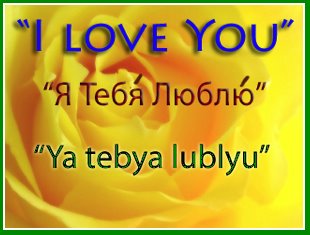
- "I love You" , of course. "Я Тебя Люблю." For your convenience I created some flash-cards to go with the lesson.


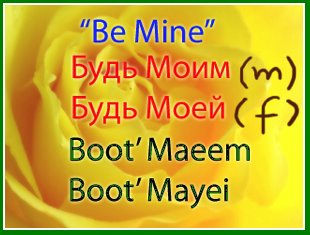
- Another phrase you can put down in your valentine is: "Be Mine". And depending on the gender the Russian translation is either "Будь Моим" or "Будь Моей".


- "We're Made for each Other" - "Мы Созданы Друг для Друга".

- If you are an older couple I have a perfect card for you on Apple site. It's one of the iCards Apple offers. It uses one of my photos that depicts a pair of old boots. It says: "We May be Old, but we Match!" In Russian, "Хоть Мы и Стары, Мы - Идеальная Пара!" You can locate my card on mac.com --> iCards --> under "new in iCards".


ENDING WORD and a SONG

Now that you have a few phrases in Russian to dazzle your sweetheart, you might want to play this next song for her/ or him. It's called БЕЛОЙ АКАЦИИ ГРОЗДЬЯ ДУШИСТЫЕ. Literally "Sweet-smelling clusters of acacia". It's a romantic song about 2 lovers reminiscing about their time together one summer. The unforgettable time they spent under an acacia tree, listening to the nightingale's song and whispering the words "I am yours forever".


БЕЛОЙ АКАЦИИ ГРОЗДЬЯ ДУШИСТЫЕ
(А.Пугачев – музыка неизвестного автора)


Целую ночь соловей нам насвистывал,
Город молчал и молчали дома...
Белой акации гроздья душистые
Ночь напролет нас сводили с ума.

Сад весь умыт был весенними ливнями,
В темных оврагах стояла вода.
Боже, какими мы были наивными,
Как же мы молоды были тогда!

Годы промчались, седыми нас делая.
Где чистота этих веток живых?
Только зима да метель эта бела
Напоминают сегодня о них.

В час, когда ветер бушует неистово,
С новою силою чувствую я:
Белой акации гроздья душистые
Невозвратимы, как юность моя!
Белой акации гроздья душистые
Неповторимы, как юность моя...

Thursday, February 09, 2006

'A Spoonful of Russian' is back!

This is just a short note to those of my listeners, who read my blog, informing them of my come back. Please, fire up your iTunes or any other RSS aggregator of your choice this weekend to get your next 'Spoonful of Russian!' During this transition period I'll be storing my files on my dot mac space.

You can subscribe to it by visiting www.spoonfulofrussian.com

~Natalia

Wednesday, January 04, 2006

BBC interviews Natalia

Hi, everyone. Добрый день. This is just a short note to let you know I haven't forgotten about my listeners and "A Spoonful of Russian' podcast will be coming back! I also wanted to share with you an interview I recently gave to a BBC reporter and producer April Peavey. It aired today, January 4th, 2006. It was a pleasure and honor to work with April.

The interview is a co-production of the BBC World Service, PRI and WGBH Boston.

Friday, November 18, 2005

Lesson 10 - No Lesson, but rather 'Bye for Now'...


Bought a new mic, new headphones, iMac G5 - all set up to produce 'killer shows', yet this show will be the last one before I can get settled in our house.

This is show#10 and the last one as far as my introductory lessons go. After almost 7,000 visitors to my site and close to 3,000 subscribers (at one point) I decided to take a sabbatical to re-evaluate the show and make some changes. Renovating of the house damaged by hurricane Katrina is another reason for the break.

I would like to thank all my loyal long-time listeners as well as new ones for downloading the show. I really enjoyed getting the lessons ready as well as doing the production itself. I wouldn't be able to do it without you inspiring me.

There will be no lesson today. If you sent me a comment or a question - don't worry. I will be answering all the questions via e-mail personally in the days to come. Stay subscribed to 'A Spoonful of Russian' - that way you'll be informed of all the changes.

I did include a song in this last show.

"Сердце" ('Heart')
also known as "Как много девушек хороших" ('There are so many nice girls")


Как много девушек хороших,
Как много ласковых имен,
Но лишь одно из них тревожит,
Унося покой и сон, когда влюблен.

Любовь нечаянно нагрянет,
Когда ее совсем не ждешь,
И каждый вечер сразу станет
Удивительно хорош, и ты поешь:

Припев:
Сердце, тебе не хочется покоя.
Сердце, как хорошо на свете жить!
Сердце, как хорошо, что ты такое,
Спасибо, сердце, что ты умеешь так любить!

Friday, November 11, 2005

Microphone trouble:(


The mic I am used to is a 'gonner'. Found out today as I was getting ready to record the audio. Not only that. I also managed to sit on my Sony headphones I use for podcast production. That's quite embarassing, although the room was totally dark and the headphones were right on the chair. Anyway, Lesson#10 is pushed to the next Saturday. Hopefully, I'll be able to aquire new mic and earphones by then.....Stay tuned.

Saturday, November 05, 2005

Lesson 9 - Food


How do you feel about food? Я люблю поесть! (I love to eat!) most people will say.


 Whether you love it or hate it, we deal with food and talk about food every single day. That reminds me, I have to throw together PLOV (rice-based national dish of Uzbekistan) for tonight (http://en.wikipedia.org/wiki/Plov) ....be right back.

(Natalia making noise in her kitchen)

First, let me give you a list of some popular food items in Russian:

Хлеб - bread
Соль - salt
Сахар - sugar
Яйца - eggs


Икра
- caviar


Масло - butter
Молоко - milk
Кефир - kefir (a sour-tasting drink made from cow's milk fermented with certain bacteria.)
Сок - juice
Овощи - vegetables
Фрукты - fruit
Сыр - cheese
Мясо - meat


Рыба - fish


Колбаса - sausage
Шоколад - chocolate
Торт - cake


Вода - water


Пиво - beer
Шампанское - champaign
Водка - vodka
Чай - tea


Кофе - coffee


Just to name a few. Now, some dishes in Russian:


Салат - salad


Плов - plov (Uzbek-style Rice Pilaf)
Суп - soup
Горячее - main course
Беф-строганов - Beef Stroganoff
Солянка - Russian Spicy Meat Soup


Борщ - Ukranian Beet Soup


Винегрет - Russian “Pink” Salad Vinaigrette
Пельмени - Beef dumplings
Грибы Фаршированные - Stuffed Mushrooms
Баклажанная икра - Chopped eggplant simmered with tomatoes, carrots, pepper and onion.
Селедка под шубой - Chilled slices of vinegar-marinated herring, served with sliced onions, turnip salad, boiled potatoes with a touch of butter and fresh dill.
Блины - Crepes


Шашлык - Kebab


Голубцы - Cabbage leaves stuffed with meat+rice mixture
Фаршированный Перец - Stuffed Greeen Peppers
--------------------------------------------------------------------


Below is the dialog from today's lesson. Let's try to make an order at one of the Russian restaurants. It's lunch time and you are a client, клиент (speaking in masculine gender in this dialog) at one of the nicer Russian resaturants.

By now I am sure you will be able to greet your server (официант) properly in Russian. You would say 'Добрый день', 'Здравствуйте', but never 'Привет' or 'Здорово'....Leave the latter for your friends and family.

Your официант would probably ask you if you'd want a starter.

Официант: Что вы хотите на закуску?
Server: What would you like for a starter?

Клиент: Порцию фаршированных грибов, пожалуйста.
Client: A serving of stuffed mushrooms, please.

Официант: Отлично. Что закажeте из горячего?
Server: Great. What would you like for your main course?

Клиент: Я возьму борщ со сметаной. А винегрет у вас есть?
Client: I'll take some borsch with sourcream. Do you have vinaigrette on the menu?

Официант: Конечно есть. У нас отличный винегрет!
Server: Of course we do. We serve one great-tasting vinaigarette!

Клиент: Тогда возьму тарелочку и винегрета.
Client: Then I'll take a plate of vinaigrette as well.

Официант: Так, а на второе что будем? Позвольте порекомендовать Вам голубцы.
Server: OK. What would you have for your second course? May I recommend Golubtzi to you?

Клиент: Голубцы так голубцы. Давненько я их не едал.
Client: Golubtzi it will be. Haven't eaten them in a long time.

Официант: Очень хорошо. Что будете пить? У нас есть чай, кофе, пиво, шампанское, водка.
Server: Very well. What are we going to drink? We have tea, coffee, beer, champaign, vodka.

Клиент: Ну для спиртного еще рановато, да и компания нужна. Принесите мне просто кофейку.Client: It's a bit too early for alchohol, and one has to have company for that. Why don't you just bring me coffee.

Официант: Сделаем так, как скажете! Через парочку минут принесу закуску.
Server: Will do as you ask. I'll bring your starter in a couple of minutes.

Клиент: Спасибо.
Client: Thanks.


After your meal, if you are inclined to do so, you can leave a tip (чаевые), which is between 18-20% of your bill. Leaving a tip is still only customary at upscale restaurants in Russia as my sources tell me.
---------------------------------------------------------

Today, I'm gonna play a song from a Russian comedy called "Кавказская Пленница" ("The Prisoner of Caucasus"). The song is titled "A Song about Bears". It's a funny song about polar bears who spin the axis of the Earth so that the life would go on. :) And how do they do that? They rub their backs against the axis!

Где-то на белом свете
Там где всегда мороз
Трутся спиной медведи
О земную ось

Мимо плывут столетья
Спят подо льдом моря
Трутся об ось медведи
Вертится земля

Ля ля ля ля ля ля ля
Вертится быстрей земля
Ля ля ля ля ля ля ля
Вертится быстрей земля

Трутся они стараясь
Вертят земную ось
Чтобы влюблённым раньше
Встретиться пришлось

Чтобы однажды утром
Раньше на год иль два
Кто - то сказал кому - то
Главные слова

Ля ля ля ля ля ля ля
Главные сказал слова
Ля ля ля ля ля ля ля
Главные сказал слова

Вслед за весенним ливнем
Раньше прийдёт рассвет
И для двоих счастливых
Много - много лет

Будут сверкать зарницы
Будут ручьи звенеть
Будет туман клубиться
Белый как медведь

Ля ля ля ля ля ля ля
Вертится быстрей земля
Ля ля ля ля ля ля ля
Вертится земля

Где-то на белом свете
Там где всегда мороз
Трутся спиной медведи
О земную ось

Мимо плывут столетья
Спят подо льдом моря
Трутся об ось медведи
Вертится земля

Ля ля ля ля ля ля ля
Вертится быстрей земля
Ля ля ля ля ля ля ля
Вертится быстрей земля

Ля ля ля ля ля ля ля
Вертится быстрей земля
Ля ля ля ля ля ля ля
Вертится быстрей земля

Friday, November 04, 2005

Rapid growth of the Podcast


Can you see that little red icon that looks like a bowl full of red caviar with the spoon sticking out? That's our podcast. We made it to the front page of iTunes podcast directory. On the top '100' list we are #40 or so....The number of listeners of this show more than doubled. Last week we had 600+ subscribers, now there are over 1200!

Gotta get back to putting the finishing touches on my next Lesson#9. Stay tuned.....

Saturday, October 29, 2005

Unforeseen Events

My dear listeners, due to some unforeseen events there will be no class this week. No class = no homework, so don't go wild! 'See ya' next week:) Пока!

Friday, October 21, 2005

Lesson 8 - Speaking on the Phone

Привет, дорогие слушатели. (Hi, dear listeners). Сегодня суббота, 22 октября. (Today's Saturday, Oct. 22nd.)

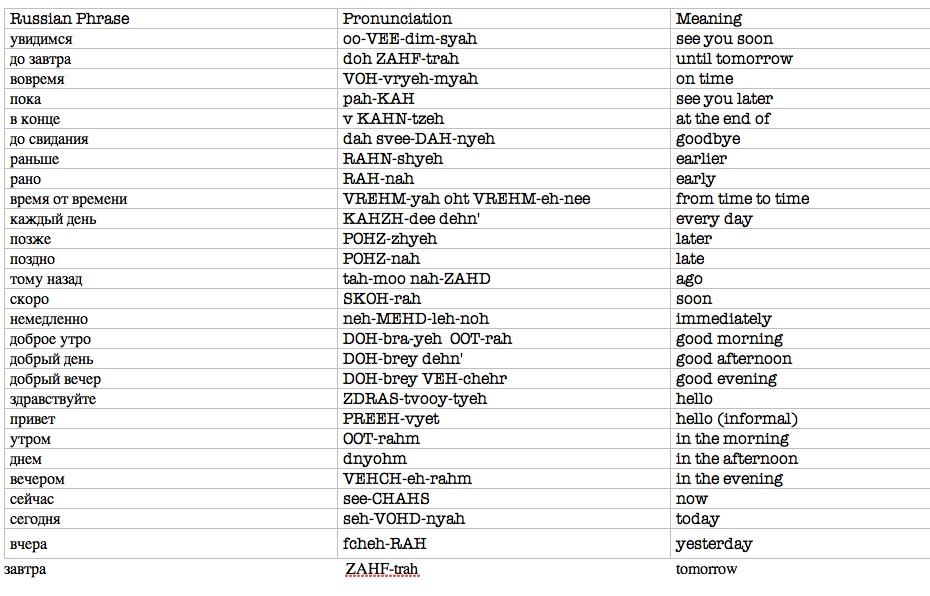
Let's check your homework from the previous lesson#7:


Exercise 7.1

1. Туристы летают в Мексико-Сити из Нью-Йорка ___на самолете___ .
Tourists travel from New York to Mexico City (by plane).

2. Люди ездят на работу ___на автобусе___ в Атланте.
People go to work in Atlanta (by bus).

3. Поездка в Европу ___на теплоходе___ 3 месяца.
The journey to Europe (by boat) is 3 months long.

4. Мы ходим ___пешком___ к бабушке.
We walk (by foot) to Grandma's house.

5. Я поеду к врачу ___на машине___ завтра.
I will drive (by car) to the doctor's office tomorrow.

6. Они катались со спуска горы ___на лыжах___ .
They went down the side of the mountain by (on skis).


Exercise 7.2

1. Дорога идет ___вдоль___ берега.
The road goes (alongside) the shoreline.

2. Где находится магазин? Он ___за углом___ .
Where is the store located? It's (around the corner).

3. Кафе ___рядом___ с метро.
The cafe is (next to) the subway.

4. Я вас видел вчера. ___Куда___ вы шли?
I saw you yesterday. (Where) were you going?

5. Никак не мог найти мою ручку. ___Где___ она?
I can't find my pen. (Where) is it?


Exercise 7.3 (fill in the blanks by translating the words in brackets)

1. Your roommate leaves for a weekend retreat in the mountains, and you say (see you soon):___Увидимся!___

2. After you have dropped your kids off at the grandparents' house, you tell them (see you later):___Пока!___

3. Your late afternoon meeting began at 3:30, but you arrive (late) at 3:45: ___поздно___

4. You hope that you find those keys (soon): ___скоро___

5. The concert started at 8 p.m. and you arrived exactly at 8 p.m. You were (on time): ___вовремя___

6. You check your e-mail (every day):___каждый день___

------------Phone Conversations------------
(the audio files of the conversations are on the 'Downloads' page)



Two friends

(ring)

-Алло?
(Hello?)

-Алло, Маш. Привет. Это Наташа.
(Hello, Masha. Hi. It's Natasha)

-А, Наташ, привет. Как дела? -- should be 'Как жизнь'
(Oh, it's you Natasha. How are you?) -- should be 'How's life/What's up'

-Да так, ничего нового. Вот подкаст делаю. А ты чем занимаешься?
(Nothing much. Just working on my podcast. What about you?)

-А у меня времени ни на что не хватает. Мои дети сейчас занимаются каратэ, балетом, да еще и футболом! Нужно везде успеть.
(And I have no idea where my time goes. My kids are going to karate, ballet and even soccer practices now! Gotta make it everywhere on time)

-Может найдете часик поиграть с нами в парке?
(How about finding an hour for a play date with us at the park?)

-С удовольствием, Наташ. Давай встретимся во вторник в 5 вечера?
(I'd love to, Natasha. Let us meet on Tuesday at 5pm)

-Давай. Ну, до встречи.
(OK, See you then)

-Пока.
(Bye)


------------------------------------------------------------------------------

School Principal calls a Parent

(ring)

-Алло?
(Hello)

-Добрый день. Могу ли я поговорить с Марией Витальевной?
(Good afternoon. May I speak with Maria Vitalyevna?)

-Да пожалуйста, это я.
(Yes, of course. This is she)

-Мария Витальевна, с Вами говорит Наталия Николаевна, директор школы, где учится ваша дочь Катя.
(Maria Vitalyevna, this is Natalia Nickolayevna, the principal of Katya's school)

-Да, я Вас слушаю.
(I see. I am listening)

-Дело в том, что нам нужно встретиться и поговорить о Катином поведении.
( The thing is, we need to have a talk about Katya's behaviour)

-Что-то серьезное произошло?
(Something bad happened?)

-Пока нет. Но может произойти. Вам в пятницу вечером удобно? Скажем в 6 часов?
(Not yet, but may happen in the future. Is Friday night OK for you? Say about 6pm?)

-Да, конечно. На каком этаже ваш кабинет?
(Sure. That'll be fine. Which floor is your office?)

-На втором. Всего хорошего, Мария Витальевна.
(It's on the 2nd floor. All the best, Maria Vitalyevna)

-Спасибо за звонок, Наталия Николаевна. До свидания.
(Thank you for calling, Natalia Nickolayevna. Good-bye.)

-До свидания.
(Good-bye)

----------------------------------------------------------------------------

"Миленький ты мой" ("My Sweetie")
Автор текста: народные
Автор музыки: народные


Миленький ты мой
Возьми меня с собой
Там в краю далёком
буду тебе женой

Милая моя,
Взял бы я тебя
Но там в краю далёком
есть у меня жена.

Миленький ты мой
Возьми меня с собой
Там в краю далёком
буду тебе сестрой

Милая моя,
Взял бы я тебя
Но там в краю далёком
есть у меня сестра.

Миленький ты мой
Возьми меня с собой
Там в краю далёком
буду тебе чужой

Милая моя,
Взял бы я тебя
Но там в краю далёком
чужая ты мне не нужна.

Friday, October 14, 2005

Lesson 7 - Getting Around

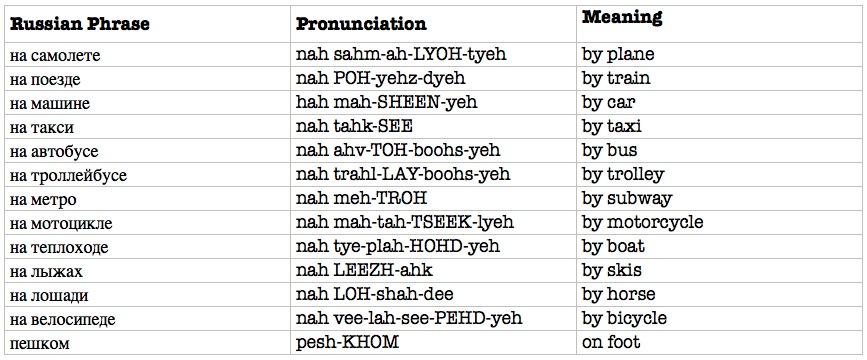
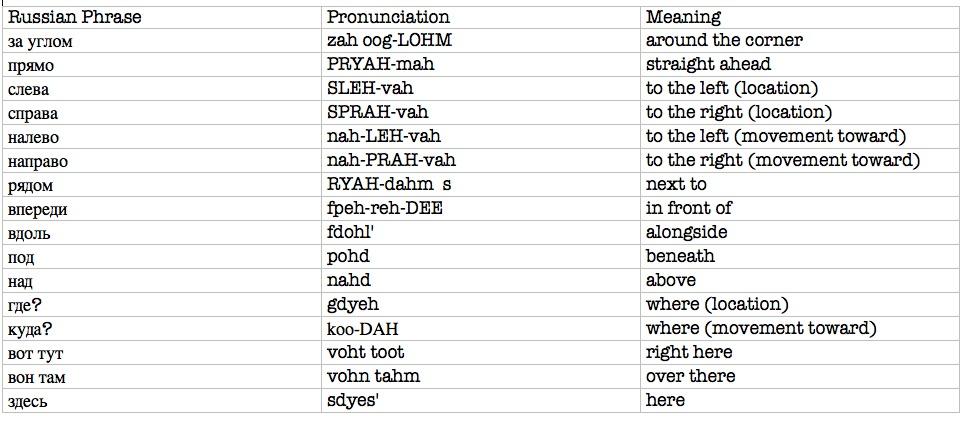
Let's say you want to fly out of JFK to Scheremetyevo airport in Moscow, then take the train to Vladivostok, stopping to drive through the countryside both by car and by horseback. Or maybe you enjoy boat cruises and would love to go down the Volga river! In trying to put all of this into words, you realize that you need to use some new expressions. Here are some examples:


Exercise 7.1

1. Туристы летают в Мексико-Сити из Нью-Йорка _________________________ .
Tourists travel from New York to Mexico City (by plane).

2. Люди ездят на работу _______________________ в Атланте.
People go to work in Atlanta (by bus).

3. Поездка в Европу _____________________ 3 месяца.

The journey to Europe (by boat) is 3 months long.
4. Мы ходим _____________________ к бабушке.
We walk (by foot) to Grandma's house.

5. Я поеду к врачу ____________________ завтра.
I will drive (by car) to the doctor's office tomorrow.

6. Они катались со спуска горы ____________________ .
They went down the side of the mountain by (on skis).


Exercise 7.2

1. Дорога идет ________________ берега.
The road goes (alongside) the shoreline.

2. Где находится магазин? Он ___________________ .
Where is the store located? It's (around the corner).

3. Кафе _______________ с метро.
The cafe is (next to) the subway.

4. Я вас видел вчера. ______________ вы шли?
I saw you yesterday. (Where) were you going?

5. Никак не мог найти мою ручку. ________ она?
I can't find my pen. (Where) is it?


Exercise 7.3 (fill in the blanks by translating the words in brackets)

1. Your roommate leaves for a weekend retreat in the mountains, and you say (see you soon):___________________________

2. After you have dropped your kids off at the grandparents' house, you tell them (see you later):___________________________________

3. Your late afternoon meeting began at 3:30, but you arrive (late) at 3:45: ______________

4. You hope that you find those keys (soon): _____________________

5. The concert started at 8 p.m. and you arrived exactly at 8 p.m. You were (on time): ____________________

6. You check your e-mail (every day):________________________


Numbers 11-20

11
одиннадцать
adeenatsat'

12
двенадцать
dvyenatsat'

13
тринадцать
treenatsat'

14
четырнадцать
cheytirnatsat'

15
пятнадцать
pyatnatsat'

16
шестнадцать
shyesnatsat'

17
семнадцать
syemnatsat'

18
восемнадцать
vasyemnatsat'

19
девятнадцать
dyevyatnatsat'

20
двадцать
dvatsat'

(end consonants with an apostrophe (') after it is 'soft' )


Final words: That concludes our lesson 7. I have all the material we've covered today on spoonfulofrussian.com Don't forget to do the excersizes - we'll check them next time we meet.

Oh, and here are the lyrics of the song (you can always view them on your iPod...as you are listening to this lesson, click 3 times)

Черный кот
Музыка Ю.Саульского. Слова М.Танича


Жил да был черный кот за углом,
И кота ненавидел весь дом.
Только песня совсем не о том,
Как не ладили люди с котом.

Припев:
Говорят, не повезет,
Если черный кот дорогу перейдет,
А пока - наоборот:
Только черному коту и не везет.

Целый день во дворе суета:
Прогоняют с дороги кота,
Только песня совсем не о том,
Как охотился двор за котом.

Даже с кошкой своей за версту
Приходилось встречаться коту,
Только песня совсем не о том,
Как мурлыкала кошка с котом.

Бедный кот от усов до хвоста
Был черней, чем сама чернота,
Да и песенка, в общем, о том,
Как обидно быть черным котом.

Friday, October 07, 2005

Lesson 6 - Don't Get Stressed About Stress and other advice....


Добрый день, дорогие друзья! (Hello, dear friends).

Сегодня суббота, 8-ое октября. The show is still recorded at my temp 'studio' away from my home in New Orleans.

In this podcast you will learn how to say the days of the week in Russian, as well as count from 1-10. You will also find out why you shouldn't get stressed over stress in Russian words. We will take a look at some simple sentence structures and word order within sentences as well....This might be the largest 'Spoonful of Russian' ever, but it's all good!

Correction: In the beginning of the podcast I got the date wrong. The show was being recorded on Friday, Oct, 7th. You will hear me say: "Today is Saturday, 7th of October." Oops!


Just to add to our past lesson - there are noun, adjective and verb cognates in Russian, and they can help you speak smoothly and easily, making you sound very natural. But don't let false cognates trick you into saying something you don't intend!

I'd like to answer a question of one of my listeners. He was asking about the role of the 'hard sign' and the 'soft sign' in the Russian alphabet. The soft sign 'мягкий знак' has no sound of its own. Rather it tells you that the consonant before it is soft. (учитель).....The hard sign 'твердый знак' has no sound of its own as well. It indicates that the preceeding consonant is hard. You make a slight break in the word, immediately after the consonant it follows. (объем - volume - объем).

-------------------------------------------------------

- Что это? Это кофе?
- Нет, это не кофе. Это чай.

- What is this? Is this coffee?
- No, it's not coffee. It's tea.

and now a slightly different dialogue:

- Кто это? Это учитель?
- Нет, это не учитель. Это студент.

- Who is this? Is this a teacher?
- No, It is not a teacher. It is a student.

--------------------------------------------

Forming a negative sentence:

Это хорошо (It is good)
Это не хорошо (It's not good)
---------------------------------------------

If you don't know how to count from 1 to 10 in Russian, today's the day! Most of these numbers have a soft sign at the end, so don't forget to soften the last consonant!

0 (nol') - ноль
1 (adeen) - один
2 (dva) - два
3 (tree) - три
4 (chyetirye) - четыре
5 (pyat') - пять
6 (shyest') - шесть
7 (syem') - семь
8 (vosyem') - восемь
9 (devyat') - девять
10 (desyat') - десять

Days of the week:


понедельник (pah-neh-DEHL-neek) Monday
вторник (FTOR-neek) Tuesday
среда (sreh-DAH) Wednesday
четверг (chet-VERK) Thursday
пятница (PYAHT-neet-sah) Friday
суббота (soo-BOH-tah) Saturday
воскресенье (vahs-kree-SEHN-yeh) Sunday

------------------------------------------------------------------------------

Lyrics of this week's Russian song:

Зачем вы, девушки, красивых любите?
(Е.Птичкин - И.Шаферан)
from the film "My Street"

Ромашки спрятались, поникли лютики,
Когда застыла я от горьких слов:
Зачем вы, девочки, красивых любите,
Непостоянная у них любовь.

Сняла решительно пиджак наброшенный,
Казаться гордою хватило сил,
Ему сказала я: - Всего хорошего, -
А он прощения не попросил.

Ромашки сорваны, завяли лютики,
Вода холодная в реке рябит.
Зачем вы, девочки, красивых любите,
Одни страдания от той любви...

Зачем вы, девочки, красивых любите,
Непостоянная у них любовь.

---------

Tuesday, October 04, 2005

RSS feed problem solved!

Many subscribers to my podcast reported errors while downloading different episodes of "A Spoonful of Russian" podcast. iTunes, iPodder (and other feed aggregators) either didn't show some files, or had one of the dialogs (or Russian songs) linked as my episode's link.

I am not sure whose problem it was: Blogger or Feedburner. Once I removed all the extra mp3 and zip files iTunes picked the right mp3 file to show as an episode!

Good, but I don't want to give up on the idea of providing you with extra material, like Russian songs, flash cards, etc. I am looking into an alternative at the moment.

Thank you for staying 'tuned'!

Friday, September 30, 2005

Lesson 5 - Wolves in Sheep's Clothing

Sounds like cognates are the single greatest friend to folks learning Russian. However, as with most good things there are pitfalls. And these pitfalls are called 'false cognates'. A 'false cognate' is a word that shares a similar pronunciation between two languages, but means one thing in one language and something else in the other. You'd sound pretty silly if a Russian asked you what you were doing ('Что вы делаете?') and you'd answer 'Я читаю магазин' (which means 'I am reading a store')....

'False Cognates" examples.


The dialogue at the beginning of the show:

Saturday, September 24, 2005

Teacher got help!

Большое спасибо to Angela, who was kind enough to create a short tutorial for me to change the banner on this site. Kudos to my multi-talanted listener!

Friday, September 23, 2005

Lesson 4 - Alphabet and Words you Already Know

You'll be surprised how many words you would be able to recognize without studying any Russian. The words I am talking about are cognates - words borrowed from a foreign language that share a common pronunciation and meaning.The Russian version of an English word may look intimidating to you at first, but as you become familiar with the Russian characters you'll learn to recognize a cognate when you see it.


1. теннис
2. доллар
3. баскетбол
4. доктор
5. Нью-Йорк
6. Калифорния
7. бейсбол
8. университет
9. адрес
10. офис
11. футбол
12. телефон
13. бар
14. ресторан
15. такси
16. мафия


--------------------------------------------------------

The song from the show is "Katyusha" recorded in 1938.

"Катюша"
Расцветали яблони и груши
Поплыли туманы над рекой
Выходила на берег Катюша
На высокий берег на крутой

Выходила песню заводила
Про степного сизого орла
Про того которого любила
Про того чьи письма берегла

Ой ты песня песенка девичья
Ты лети за ясным солнцем вслед
И бойцу на дальнем пограничье
От Катюши передай привет

Пусть он вспомнит девушку простую
Пусть услышит как она поет
Пусть он землю сбережет родную
А любовь
Катюша сбережет
Пусть он землю сбережет родную
А любовь
Катюша сбережет

Расцветали яблони и груши
Поплыли туманы над рекой
Выходила на берег Катюша
На высокий берег на крутой
Выходила на берег Катюша
На высокий берег на крутой


Here's the translation for "КАТЮША" song. To find out more about the story behind the song, see this Wikipedia article I found to be very helpful.


This lesson is a day premature, but with the hurricane in the area I'd rather be safe than sorry:)

Saturday, September 17, 2005

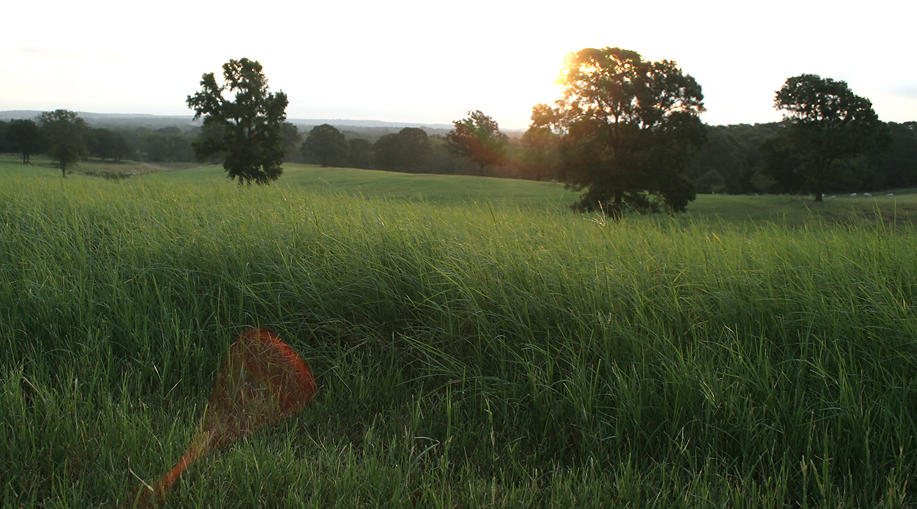
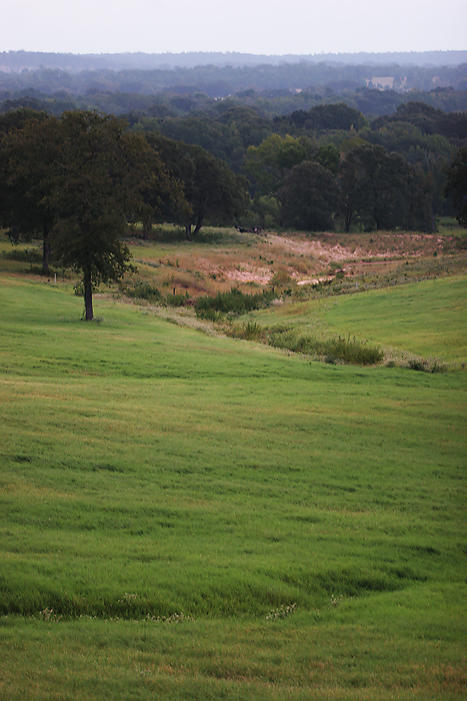
Vacation Note

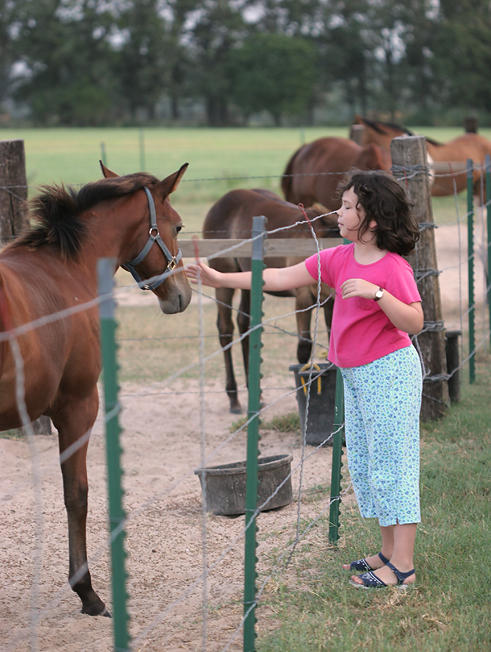
Click on the title "Vacation Note" to hear my message. I have a few photos to go with my audio note. All of them were taken in Texas outside Tyler.


I can't waith to get back to work on the next "A Spoonful of Russian" lesson!

Saturday, September 10, 2005

Lesson 3 - 'How are You?'

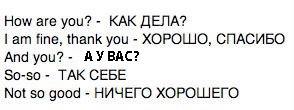
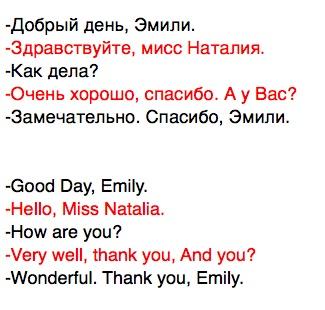
If you ask a Russian 'How are you?' (КАК ДЕЛА) you might hear more that just a simple "OK". But for starters we'll learn some simple replies. Here are the transcripts of the dialogs from our lesson.

#1


(- Как дела, Эмили?
- Хорошо, спасибо. )


#2


(- Как дела, Эмили?
- Хорошо, спасибо. А у вас?)

("I am fine as well" - "Тоже хорошо" )


#3


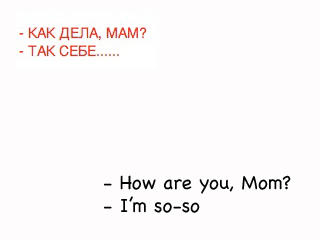
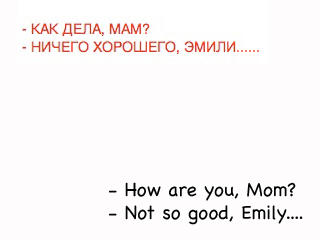
(- Как дела, мам?
- Так себе...)


#4


(- Как дела, мам?
- Ничего хорошего, Эмили...)


Word/Expressions list:


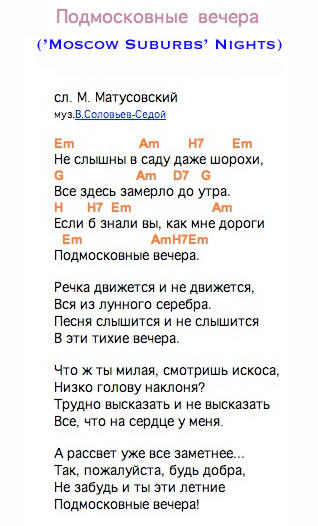
Provided below are the lyrics to the song you heard on the show (click for a bigger view)


 Email me with any questions or comments. And yes, the lessons WILL get more challenging.